Common Skin Problems in Pugs: Causes, Symptoms, and Care Tips

Disclosure: This post contains affiliate links. As an Amazon Associate, I earn from qualifying purchases—at no extra cost to you.
Last Updated: December 2025
Pugs have soft coats and adorable wrinkles, but their skin is also one of their most sensitive areas. Many owners notice redness, itching, bumps, or unusual smells and aren’t sure whether it’s normal or something to worry about.
Skin issues are very common in pugs and are often tied to how the breed is built. Knowing which problems show up most often makes it easier to spot issues early and keep your pug comfortable.
👉 For a broader look at how skin issues connect with overall breed health, this breakdown of common pug health challenges explains why recurring skin concerns are so common in pugs.
🔍 Why Pugs Are Prone to Skin Problems
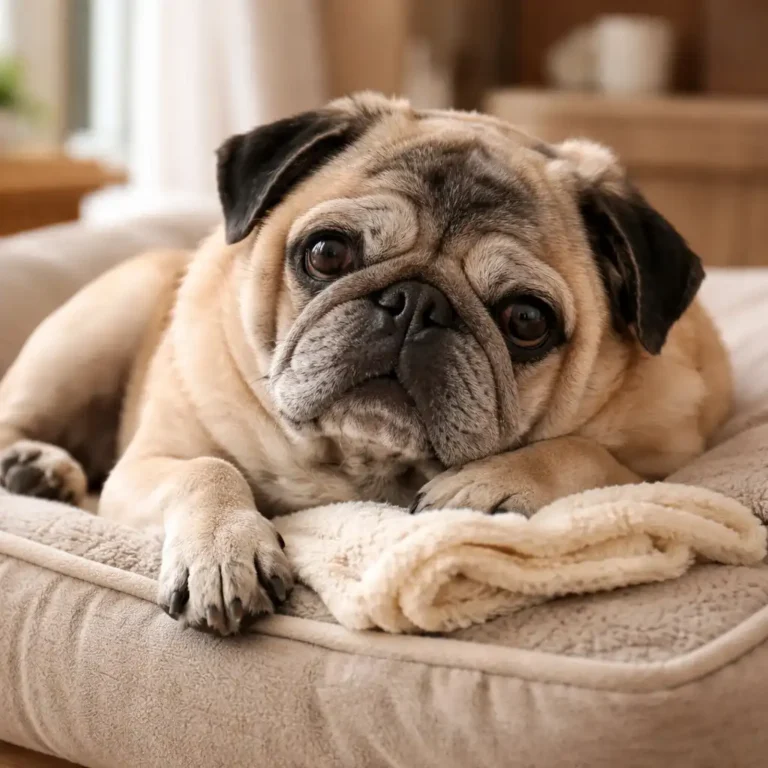
Pugs have several traits that make skin issues more likely. Their deep wrinkles easily trap moisture, dirt, and bacteria, especially around the face, neck, and tail.
They also tend to have sensitive skin and are more prone to allergies, which can trigger irritation even with small changes in environment or diet.
🔍 Skin Fold Dermatitis in Pugs
Skin fold dermatitis is one of the most common skin problems in pugs. It develops when moisture and bacteria build up between wrinkles, leading to redness, irritation, and a strong odor.
If these areas aren’t cleaned and dried regularly, the skin can become sore and infected.
🔍 Allergies and Itchy Skin in Pugs
Allergies are a major cause of skin trouble in pugs. Food sensitivities, environmental allergens, and contact irritants can all lead to itching and repeated flare-ups.
Many pugs with allergies scratch frequently, lick their paws, or develop thinning fur and inflamed skin.
🔍 Hot Spots and Skin Infections
Hot spots are painful, inflamed patches of skin that can appear suddenly and worsen quickly. They’re often caused by constant licking or scratching.
Because pugs have sensitive skin, even mild irritation can turn into a more serious infection if it’s ignored.
🔍 Dry, Flaky, or Oily Skin Issues
Some pugs develop dry, flaky skin, while others struggle with greasy coats or clogged pores. These issues can be linked to diet, bathing habits, or underlying health problems.
Changes in skin texture or coat condition are often early signs that something isn’t quite right.
🔍 Signs a Skin Problem Needs Veterinary Attention
Minor irritation can sometimes be managed at home, but certain signs shouldn’t be ignored. Ongoing itching, open sores, hair loss, swelling, or strong odors usually mean it’s time to see a vet.
Early treatment helps prevent small skin issues from turning into long-term problems.
📌 Key Takeaways
- Skin problems are very common in pugs
- Wrinkles and skin folds trap moisture and bacteria
- Allergies often trigger itching and flare-ups
- Hot spots and infections can worsen quickly
- Persistent skin issues should be checked by a vet
🟢 FAQs
Q: Are skin problems normal for pugs?
They’re common, but frequent or severe issues shouldn’t be considered normal.
Q: Why does my pug itch so much?
Itching is often caused by allergies, infections, or irritation in skin folds.
Q: Can diet affect my pug’s skin?
Yes. Food quality and sensitivities can strongly affect skin and coat health.
Q: When should I see a vet for skin issues?
If symptoms last more than a few days or keep coming back, a vet visit is recommended.
✅ Conclusion
Skin problems are a common part of pug ownership, but they shouldn’t be brushed off. Wrinkles, allergies, and sensitive skin all make pugs more vulnerable to irritation and infections. By noticing early changes and responding quickly, owners can help keep their pugs comfortable and avoid long-term skin issues.