Signs of Heatstroke in Pugs: Warning Symptoms Every Owner Should Know

Disclosure: This post contains affiliate links. As an Amazon Associate, I earn from qualifying purchases—at no extra cost to you.
Last Updated: December 2025
Pugs are affectionate, playful little dogs, but they don’t cope well with heat. Even temperatures that feel comfortable to us can quickly overwhelm them, especially during walks, playtime, or warm indoor conditions. Because heatstroke can develop fast in pugs, recognizing the warning signs early is extremely important.
Knowing how heat affects your pug—and when symptoms shift from mild discomfort to real danger—can help you act before the situation becomes life-threatening.
👉 To better understand how heat sensitivity ties into breathing and other health concerns, this guide to common pug health issues explains why temperature regulation is such a critical challenge for the breed.
🔍 What Is Heatstroke in Pugs?
Heatstroke happens when a pug’s body temperature rises higher than their body can safely manage. Dogs cool themselves mainly through panting, which already works poorly for flat-faced breeds like pugs.
When heat builds up faster than it can escape, vital organs begin to suffer. That’s why heatstroke should always be treated as a medical emergency.
🔍 Why Pugs Are Especially Prone to Heatstroke
Pugs are brachycephalic, meaning their short snouts and narrow airways restrict airflow. This makes panting less effective, especially once breathing becomes faster or more labored.
Their compact body shape, tendency to gain weight, and common respiratory issues all contribute to heat building up more quickly than it does in many other dogs.
🔍 Early Signs of Heatstroke in Pugs
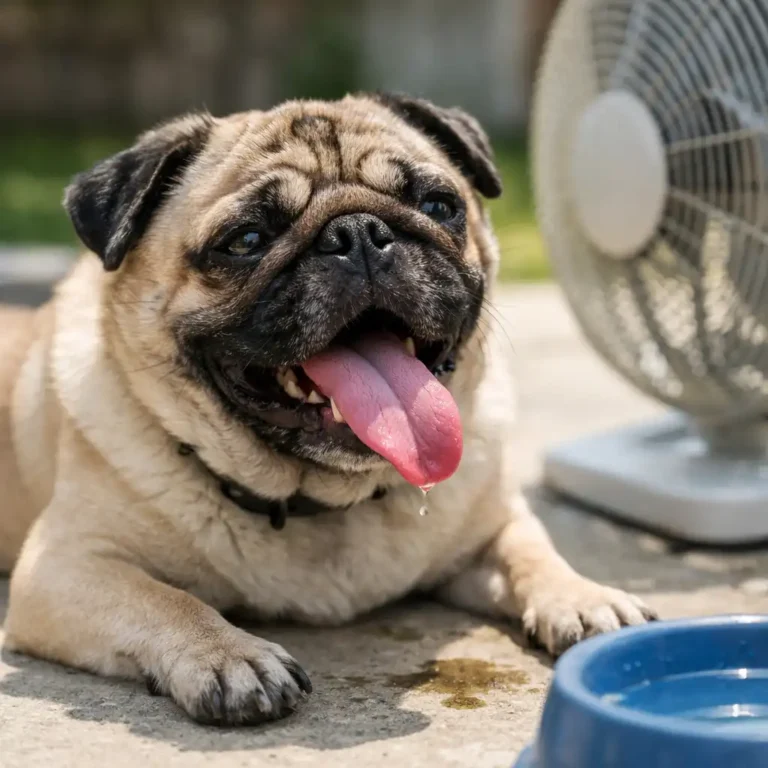
Early heatstroke symptoms can be easy to overlook at first. Heavy or rapid panting, louder breathing than usual, excessive drooling, and sudden fatigue are often the first warning signs.
Many pugs will slow down, lie flat on cool surfaces, or refuse to keep moving. These behaviors usually mean their body is struggling to cope with rising heat.
🔍 Advanced and Dangerous Heatstroke Symptoms
As heatstroke worsens, symptoms become more serious. Vomiting, confusion, weakness, and difficulty standing are all red flags.
In severe cases, a pug may collapse, have seizures, show pale gums, or lose consciousness. At this stage, immediate veterinary care is essential.
🔍 Situations That Increase Heatstroke Risk
Heatstroke often develops during warm-weather walks, outdoor play in direct sunlight, or time spent in stuffy indoor spaces. High humidity makes overheating worse by reducing how effective panting can be.
Overweight pugs, senior dogs, and those with known breathing problems are especially vulnerable and may overheat faster than owners expect.
📌 Key Takeaways
- Heatstroke can develop very quickly in pugs
- Early signs include heavy panting, drooling, and fatigue
- Severe symptoms include vomiting, confusion, and collapse
- Warm and humid environments significantly increase risk
- Overweight and senior pugs are more vulnerable
🟢 FAQs
Q: How quickly can heatstroke happen in pugs?
Heatstroke can develop in minutes, especially in hot or humid conditions.
Q: Can pugs get heatstroke indoors?
Yes. Warm rooms and poor airflow can still cause dangerous overheating.
Q: Is panting always normal in hot weather?
Light panting can be normal, but loud, nonstop, or strained panting is a warning sign.
Q: Is heatstroke life-threatening for pugs?
Yes. Without fast treatment, heatstroke can be fatal.
✅ Conclusion
Heatstroke is one of the most dangerous heat-related risks pugs face. Their flat-faced anatomy limits how effectively they can cool themselves, allowing body temperature to rise quickly in warm conditions. By recognizing early warning signs and understanding high-risk situations, owners can act quickly and protect their pugs from serious, potentially life-threatening complications.