How Hot Is Too Hot for Pugs? Safe Temperatures and Heat Risks
Disclosure: This post contains affiliate links. As an Amazon Associate, I earn from qualifying purchases—at no extra cost to you.
Last Updated: December 2025
Pugs are affectionate, playful companions, but warm weather is much harder on them than many owners expect. Temperatures that feel comfortable to people can quickly become stressful—or even dangerous—for a pug, especially during the summer. Knowing where the danger line starts helps prevent serious heat-related problems.
Because of their flat faces and compact airways, pugs struggle to cool themselves efficiently. Understanding safe temperature limits and recognizing early warning signs can make a real difference in keeping them comfortable and safe.
👉 For a broader look at how heat sensitivity fits into overall breed health, this overview of common health issues seen in pugs explains why temperature regulation is such an important concern for the breed.
🔍 What Temperature Is Considered Too Hot for Pugs
For most pugs, temperatures above 75°F (24°C) can start to feel uncomfortable, especially when humidity is high. Once temperatures reach 80°F (27°C) or more, the risk of overheating rises quickly.
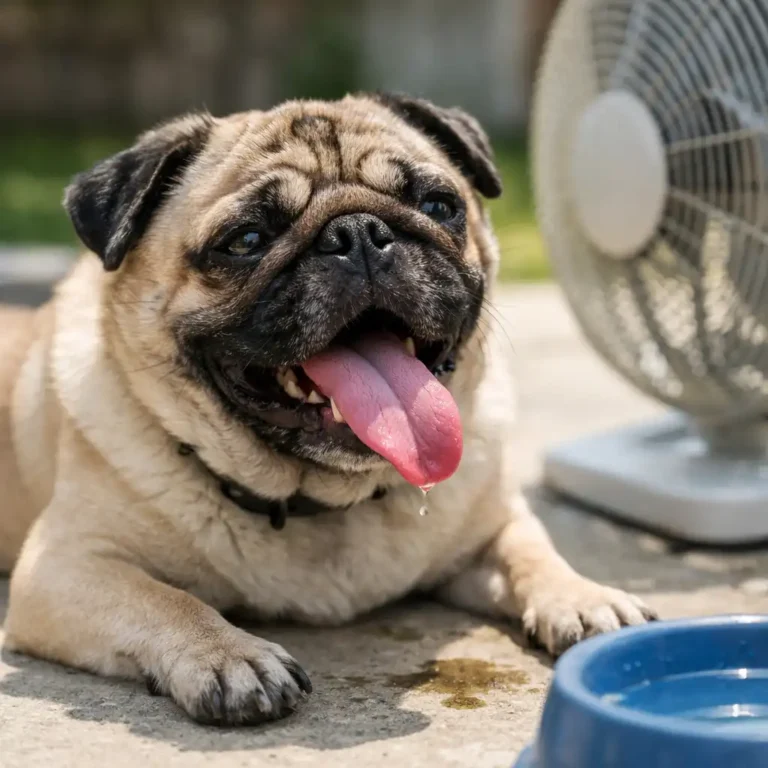
Unlike dogs with longer snouts, pugs can’t cool themselves efficiently through panting. Even short periods outdoors in warm weather can lead to heavy breathing, fatigue, and visible discomfort.
🔍 Why Pugs Overheat Faster Than Other Dogs
Pugs are a brachycephalic breed, meaning their shortened skull structure restricts airflow. This limits how much heat they can release through breathing, which is their main cooling method.
Their compact body shape, thicker coat, and tendency to gain weight can also trap heat. Together, these factors cause pugs to heat up quickly and cool down much more slowly than many other dogs.
🔍 Signs Your Pug Is Getting Too Hot
Early signs of overheating can be easy to miss at first. Heavy panting, loud or strained breathing, drooling, or slowing down during walks are often the first clues.
As heat stress worsens, a pug may appear weak, confused, or reluctant to move. Vomiting, collapse, or glassy eyes are serious warning signs and should always be treated as an emergency.
🔍 Is It Ever Safe for Pugs to Be Outside in Hot Weather
Pugs can still enjoy time outside during warmer months, but timing matters. Early mornings and late evenings are usually the safest options, when temperatures are lower and pavement isn’t scorching.
Quick potty breaks are typically fine, but long walks, active play, or direct sun exposure should be avoided once temperatures climb. Shade and fresh water should always be available.
🔍 How Indoor Temperatures Affect Pug Comfort
Heat isn’t only an outdoor issue. Warm indoor environments can also cause breathing strain and discomfort for pugs, especially during heat waves.
Most pugs are most comfortable when indoor temperatures stay around 72–74°F (22–23°C). Good air circulation helps, but during hot weather, air conditioning is often the safest way to keep them comfortable.
🔍 When Heat Becomes Dangerous for Pugs
Heatstroke can develop quickly in pugs and is a life-threatening condition. Temperatures above 85°F (29°C) greatly increase the risk, especially when combined with humidity or physical activity.
If a pug shows signs of extreme distress, rapid breathing that doesn’t slow, or collapses, immediate veterinary care is critical.
📌 Key Takeaways
- Pugs can struggle in temperatures above 75°F (24°C)
- Flat-faced anatomy makes cooling much harder
- Heavy panting and fatigue are early warning signs
- Outdoor activity should be limited in warm weather
- Heatstroke is a serious and fast-moving emergency
🟢 FAQs
Q: What temperature is unsafe for pugs?
Temperatures above 80°F (27°C) can quickly become unsafe, especially when humidity is high.
Q: Can pugs go for walks in hot weather?
Short walks may be okay during cooler hours, but midday heat should be avoided.
Q: Do pugs need air conditioning in summer?
In many climates, yes. Air conditioning helps reduce breathing strain and overheating.
Q: How fast can a pug overheat?
In hot conditions, overheating can happen within minutes, especially during physical activity.
✅ Conclusion
Pugs are far more sensitive to heat than many other dogs, and temperatures that feel mild to humans can be dangerous for them. Knowing when it’s too hot, limiting outdoor activity, and keeping indoor spaces cool are essential for protecting a pug’s health. With awareness and simple precautions, pugs can stay safe and comfortable even during warmer months.