Positive Reinforcement Training for Pugs: What It Is and Why It Works
Disclosure: This post contains affiliate links. As an Amazon Associate, I earn from qualifying purchases—at no extra cost to you.
Last Updated: December 2025
Positive reinforcement training is one of the most effective ways to teach a pug good behavior without stress or confusion. Instead of focusing on mistakes, this approach rewards the behaviors you actually want to see more often.
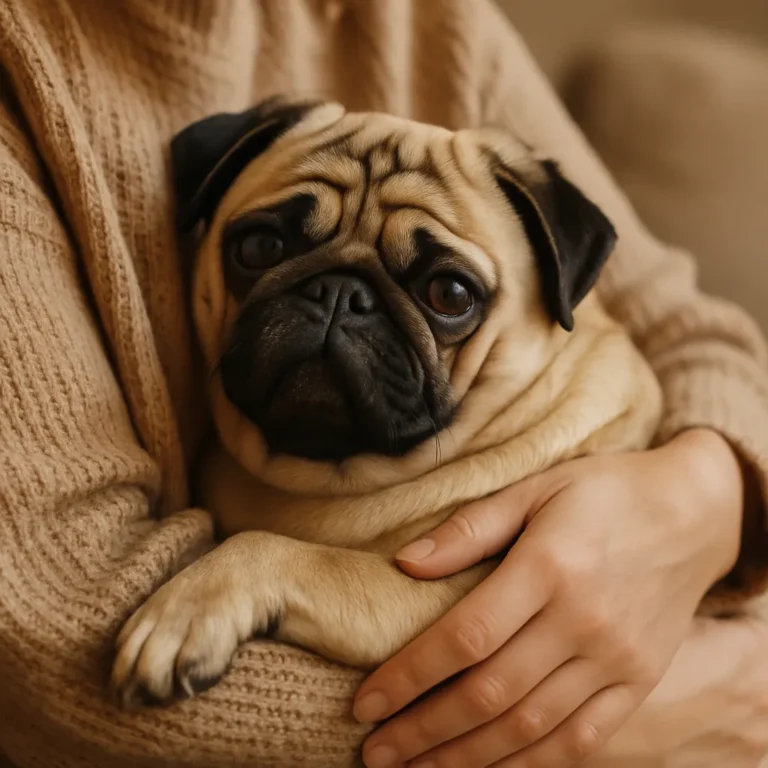
Pugs are sensitive, people-focused dogs. When training feels encouraging and predictable, they stay engaged and cooperative rather than shutting down or resisting.
👉 Want to see how reward-based training fits into a full pug training routine? This
pug training and behavior guide shows how all the core pieces work together.
🔍 What Positive Reinforcement Training Means for Pugs
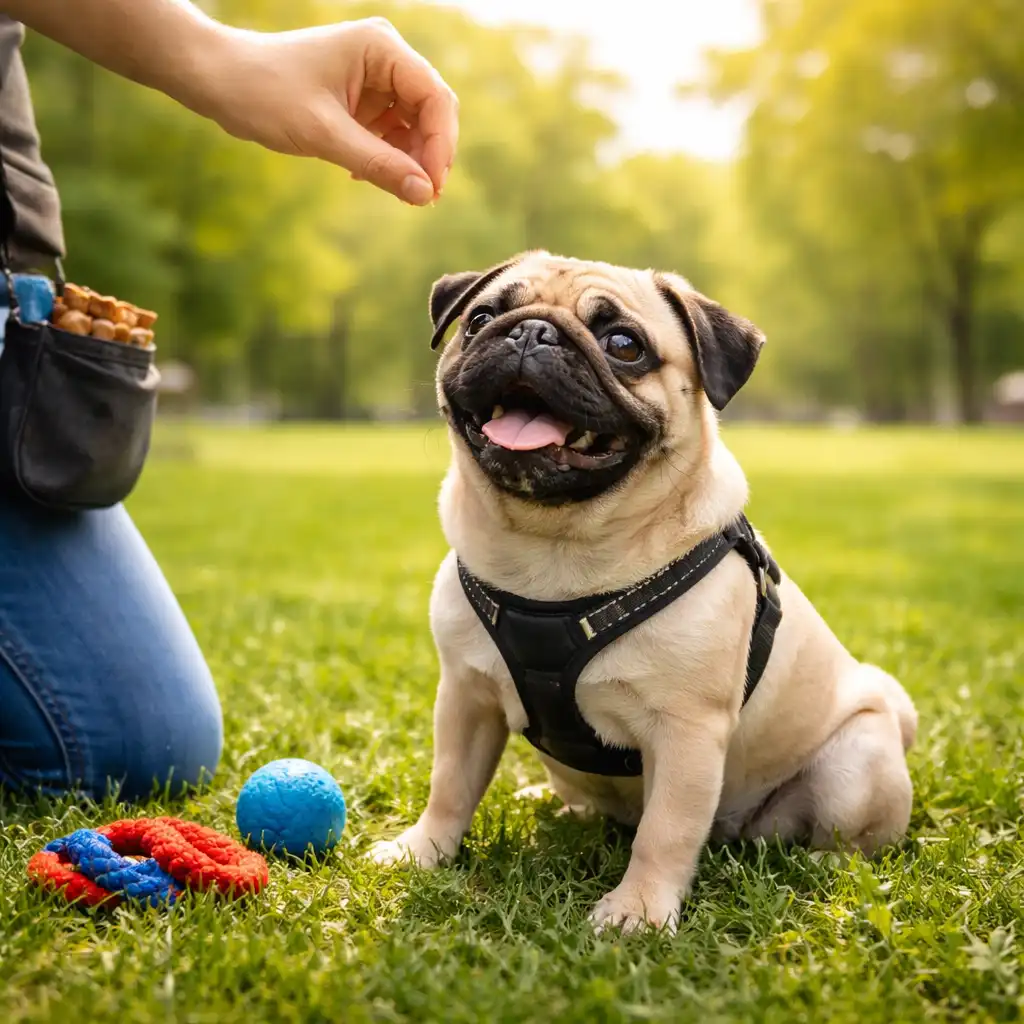
Positive reinforcement simply means rewarding a behavior so it’s more likely to happen again. The reward can be food, praise, play, or even extra freedom.
For pugs, rewards help connect actions with outcomes quickly. When a behavior leads to something positive, your pug naturally wants to repeat it.
🔍 Why Positive Reinforcement Works Especially Well for Pugs
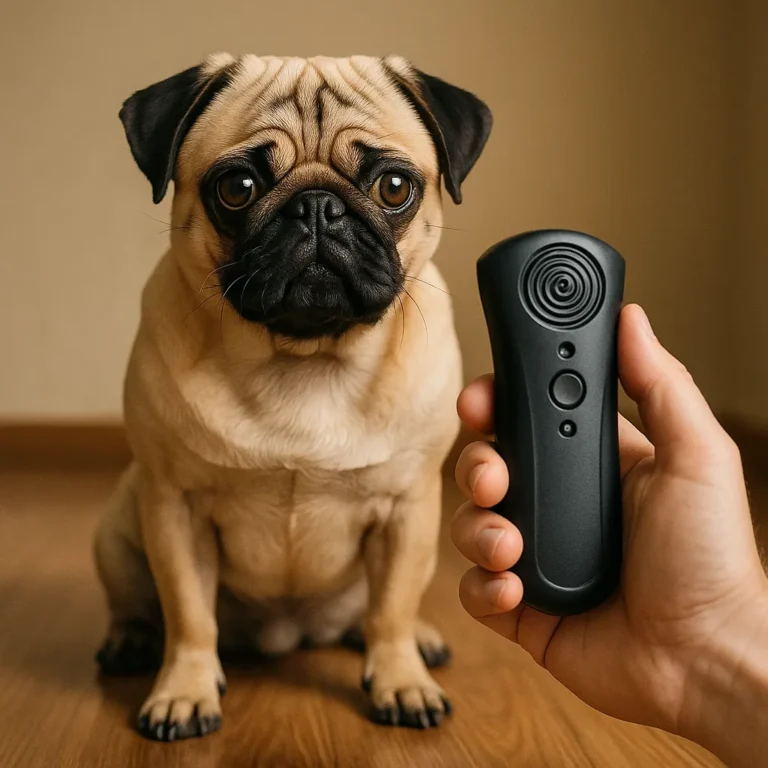
Pugs tend to respond poorly to harsh corrections. Yelling or physical punishment can make them anxious, stubborn, or unsure about what’s expected.
Reward-based training builds trust instead of fear. It teaches your pug what to do, rather than leaving them guessing about what not to do.
🔍 Common Rewards Used in Pug Training
Food is often the strongest motivator for pugs, especially early on. Small, soft treats work best because they’re easy to eat quickly.
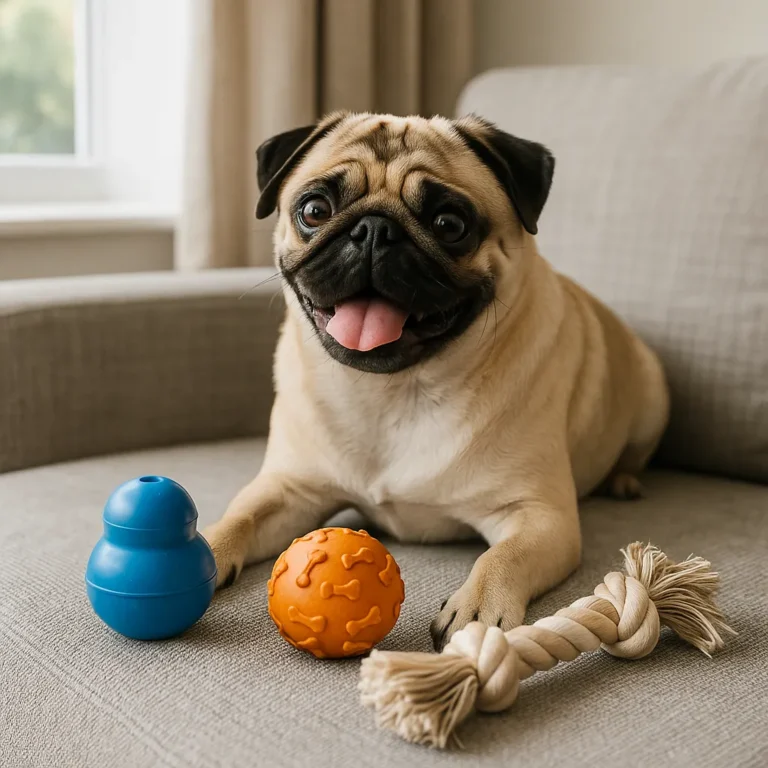
Praise, gentle petting, toys, and short play breaks can also be powerful rewards once your pug understands the behavior.
🔍 Timing Matters More Than the Reward Itself
Rewards need to happen immediately after the correct behavior. Even a short delay can make it unclear what your pug is being rewarded for.
Clear timing helps your pug understand exactly which action earned the reward, making training progress faster.
🔍 How to Use Positive Reinforcement in Everyday Situations
Positive reinforcement isn’t just for formal training sessions. You can reward good behavior throughout the day.
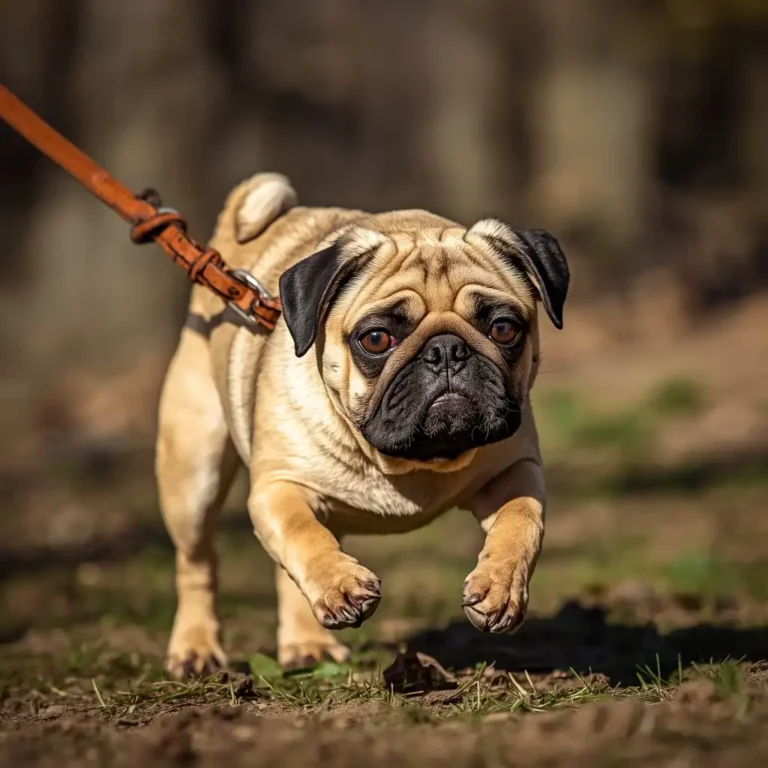
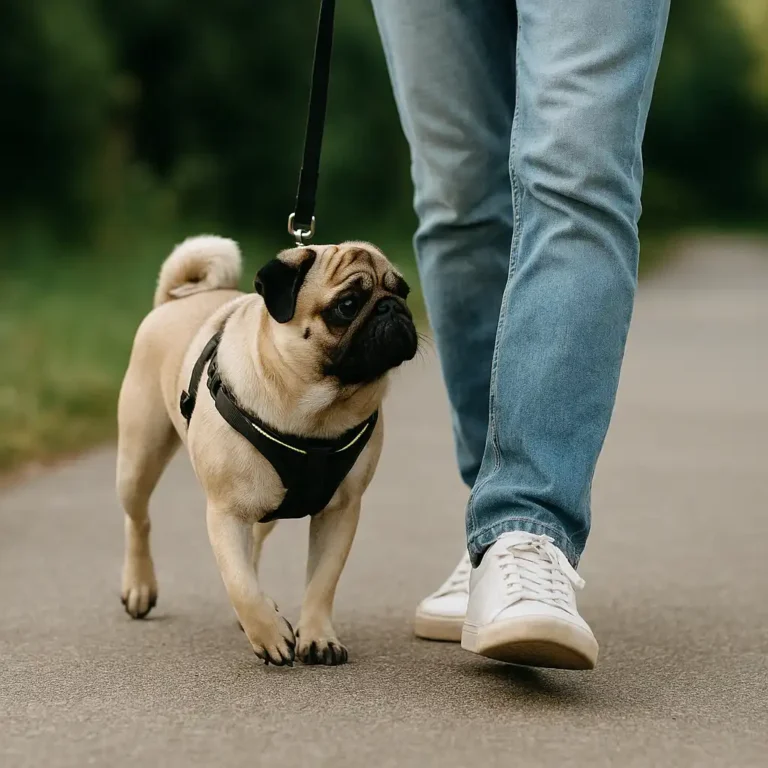
Sitting calmly, walking on a loose leash, waiting patiently, or choosing to relax instead of barking are all moments worth reinforcing.
🔍 Mistakes to Avoid With Positive Reinforcement Training
One common mistake is being inconsistent with rewards. If a behavior is sometimes rewarded and sometimes ignored, learning slows down.
Another issue is relying only on treats. Over time, mixing in praise and real-life rewards helps prevent food dependency.
📌 Key Takeaways
- Positive reinforcement rewards behaviors you want to see more often
- Pugs learn best through encouragement, not correction
- Food, praise, and play can all be effective rewards
- Good timing makes learning clearer and faster
- Consistency builds trust and confidence
🟢 FAQs
Q: Is positive reinforcement better than punishment for pugs?
Yes. Most pugs learn faster and show less stress with reward-based training.
Q: Can older pugs learn through positive reinforcement?
Absolutely. Pugs of any age can learn new behaviors when training is consistent.
Q: Do treats spoil pugs during training?
No. Treats are a teaching tool when used correctly, not a bribe.
Q: How long does it take to see results with positive reinforcement?
Some changes happen quickly, while others take weeks of steady practice.
✅ Conclusion
Positive reinforcement training works because it matches how pugs naturally learn. By rewarding the behaviors you want and staying consistent, you create clear communication without fear or pressure. Over time, this approach builds a confident, cooperative pug that enjoys learning and working with you.