How Often Should I Brush My Pug? A Simple Grooming Schedule for Healthy Skin
Disclosure: This post contains affiliate links. As an Amazon Associate, I earn from qualifying purchases—at no extra cost to you.
Last Updated: December 2025
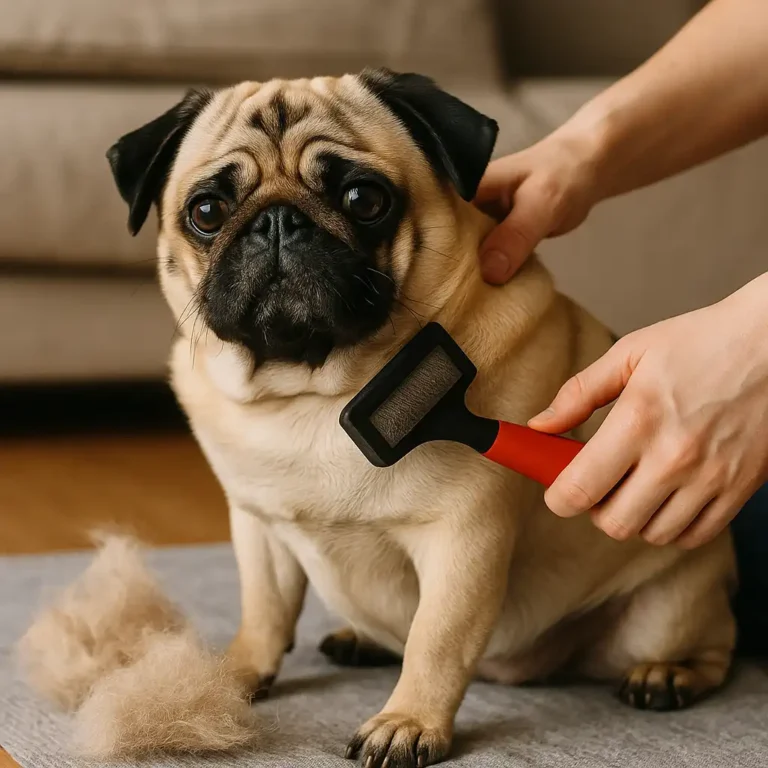
Pugs shed far more than most people expect, and even though their coat is short, the loose hair builds up fast. A steady brushing routine keeps their skin comfortable, reduces shedding around the house, and helps you spot early signs of irritation. Once brushing becomes part of your weekly rhythm, it feels quick and easy.
👉 If you’re building a simple grooming routine, this friendly pug care overview walks through everyday habits that make shedding management much easier.
🔍 How Frequently Should You Brush a Pug?
Most pugs benefit from brushing 2–4 times per week, though shedding seasons often call for a little more. Their double coat changes throughout the year, so your brushing schedule will too.
A realistic pattern for most pugs:
- Winter: 2–3 brushes weekly
- Spring/Fall: 4 or more brushes weekly
- Summer: around 3 brushes weekly
Some pugs shed heavily indoors, and for those pups, a quick daily brush with a gentle tool keeps their coat smoother and your home cleaner.
🔍 Why Pugs Need Regular Brushing
Even with short fur, pugs have a thick undercoat that releases hair all year. Without brushing, loose hair can get trapped in their wrinkles or near the collar area, sometimes leading to irritation.
Regular brushing helps by keeping their coat smooth, reducing dander around the home, and helping you catch dry skin or redness early. It’s one of the simplest ways to support your pug’s skin health.
🔍 Best Brush Types for Pugs
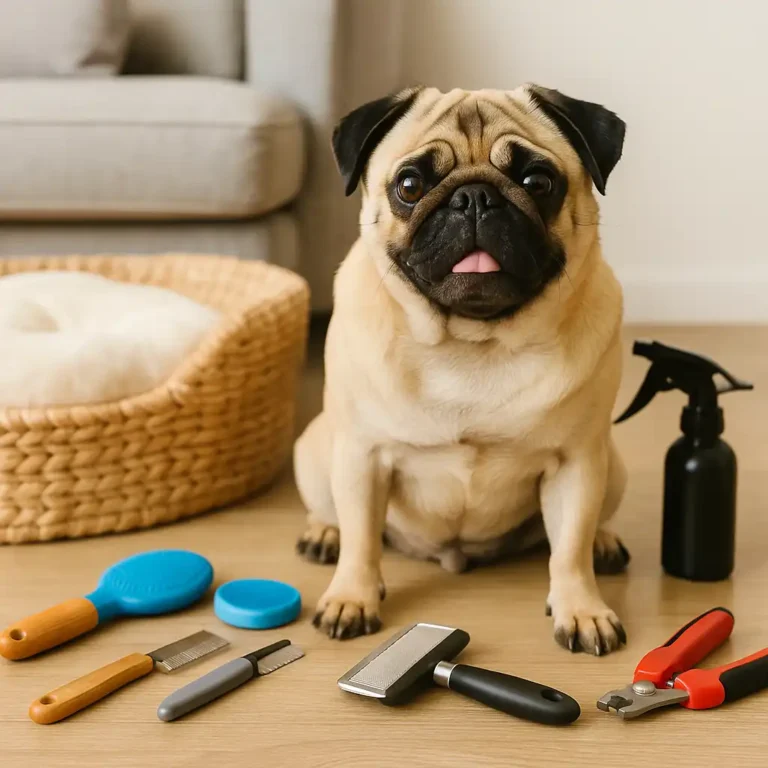
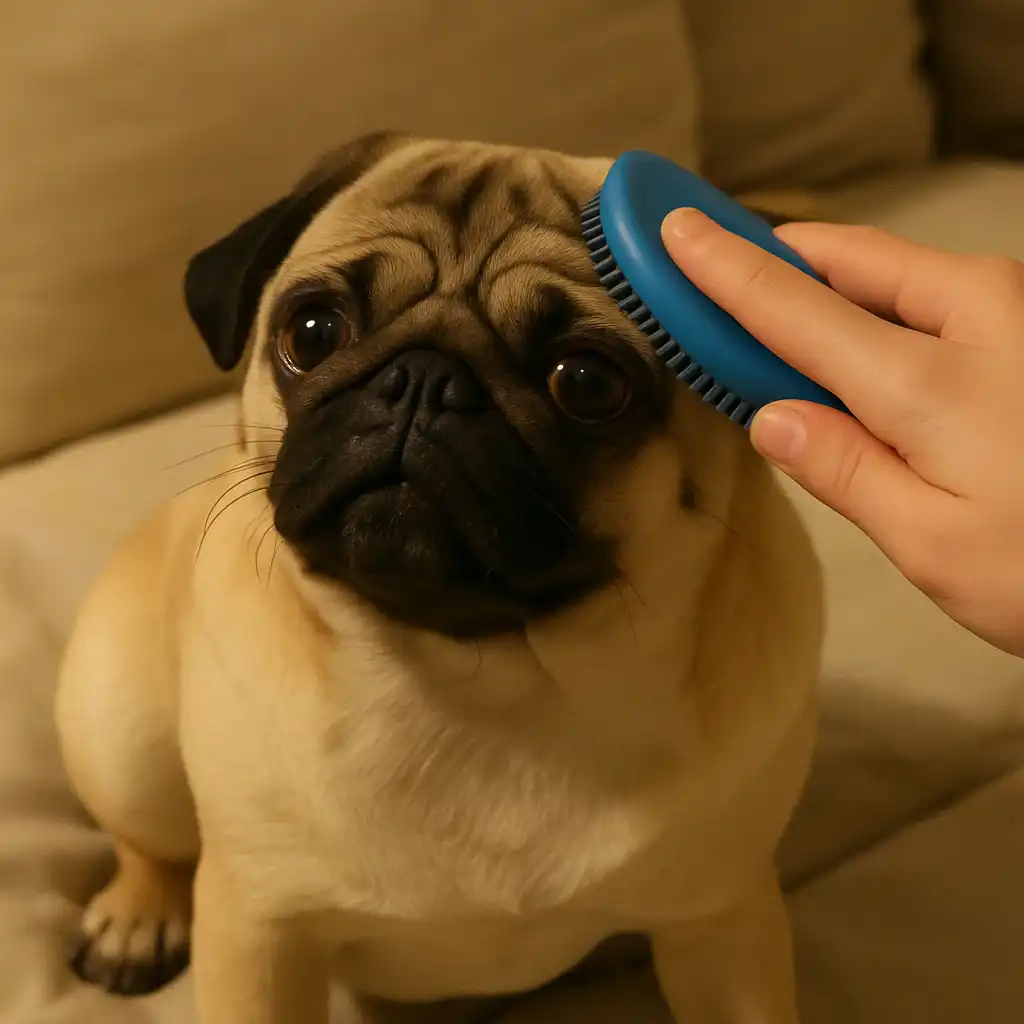
Pugs have sensitive skin, so gentle brushes are the safest and most comfortable. Soft-bristle tools, rubber curry brushes, and light-use slickers work well without scratching the skin. If you’re deciding which tools to use, this guide to pug-friendly brushes explains which options work best and when to use them.
🔍 Signs You’re Not Brushing Enough
When brushing slips, pugs often show predictable signs:
- Loose fur everywhere, especially on fabric
- Dull coat or light flaking
- Small tangles behind the ears or near the collar
- A big wave of shedding when you finally groom them
A well-brushed pug usually has a soft, shiny coat that lies flat against the body.
🔍 Tips for a Calmer Brushing Routine
A relaxed routine makes brushing more pleasant for both of you.
Brush after a walk
They’re calmer and less wiggly.
Use treats for encouragement
Positive reinforcement goes a long way with pugs.
Avoid heavy pressure or over-brushing
Their skin can get irritated if brushed too hard or too often with firm tools.
Check their wrinkles as you go
It’s an easy moment to make sure everything looks clean and dry.
📌 Key Takeaways
- Most pugs need brushing 2–4 times a week, more during heavy shedding
- Gentle tools protect their skin and still remove loose fur
- Regular brushing keeps their coat healthier and reduces dander
- Look for dullness, flakes, or tangles as signs they need more grooming
- Keeping sessions calm and positive makes brushing much easier
🟢 FAQs
Q: Do pugs shed a lot?
Yes. Their double coat sheds steadily throughout the year.
Q: Is daily brushing safe?
Yes, as long as you’re using soft, gentle tools.
Q: When is the best time to brush a pug?
After walks, when they’re naturally relaxed.
Q: Can brushing help with indoor allergies?
Definitely—removing loose hair and dander helps reduce allergens around the home.
✅ Conclusion
Brushing your pug a few times each week keeps their coat healthier, reduces loose hair, and helps prevent mild skin problems. With the right tools and a calm routine, grooming becomes quick and comfortable for both you and your pug. During shedding seasons, adjusting your schedule to more frequent brushing keeps their coat looking smooth year-round.