How to Stop My Pug From Peeing in the House: Simple Fixes That Actually Work
Disclosure: This post contains affiliate links. As an Amazon Associate, I earn from qualifying purchases—at no extra cost to you.
Last Updated: December 2025
If your pug keeps peeing in the house, it’s frustrating—but it’s also very fixable. In most cases, indoor accidents aren’t about stubbornness or bad behavior. They usually point to a routine, timing, or communication issue that hasn’t clicked yet.
Once you identify what’s causing the accidents, progress often comes faster than expected.
👉 If potty issues are part of a bigger training picture, this pug training and behavior guide explains how routines, reinforcement, and behavior patterns fit together.
🔍 Rule Out Medical Issues First
Before assuming it’s a training problem, make sure there isn’t a health-related reason behind the accidents. Urinary tract infections, bladder irritation, and stress-related conditions can all cause frequent indoor peeing.
If accidents start suddenly or increase without warning, a quick vet check should come first.
🔍 Your Potty Schedule May Not Be Frequent Enough
One of the most common reasons pugs pee indoors is simply waiting too long between potty breaks. Pugs have small bladders, especially puppies and senior dogs.
Most pugs need potty breaks:
- First thing in the morning
- After meals
- After naps
- After playtime
- Before bed
Shortening the time between breaks often leads to fast improvement.
🔍 Inconsistent Potty Locations Can Cause Confusion
If your pug sometimes uses pee pads and sometimes goes outside, they may not fully understand where they’re supposed to go.
Using the same door, the same outdoor spot, and the same cue words helps your pug connect the behavior with the correct location.
🔍 Accidents Are Usually Timing Issues, Not Defiance
Most indoor accidents aren’t intentional. They happen because signals were missed or your pug couldn’t hold it long enough.
Common signs include sniffing, pacing, circling, or suddenly disengaging. Catching these cues early prevents many accidents.
🔍 Stress and Anxiety Can Trigger Indoor Peeing
Changes in routine, loud noises, new environments, or being left alone can cause stress-related accidents—even in pugs that are otherwise well trained.
If accidents happen mostly during stressful moments, focus on calming routines and confidence-building rather than stricter potty rules.
🔍 Punishment Makes Indoor Peeing Worse
Yelling or punishing after an accident doesn’t teach your pug what to do. It often increases anxiety and can lead to hiding behavior or secretive peeing.
Calm cleanup and rewarding correct outdoor potty trips are far more effective long term.
🔍 How Crate Training Can Help
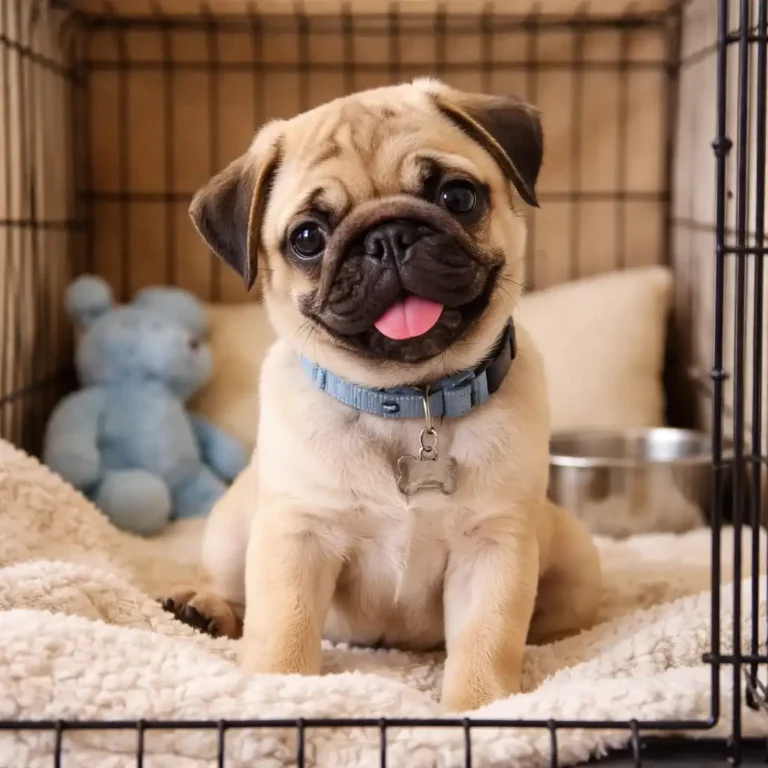
When used properly, crate training helps pugs learn bladder control and routine. Dogs naturally avoid soiling their sleeping area.
Crates should always be sized correctly and used as a management tool—not punishment.
📌 Key Takeaways
- Indoor peeing almost always has a clear cause
- Medical issues should be ruled out first
- More frequent potty breaks often fix the problem
- Consistency matters more than strict rules
- Calm responses speed up learning
🟢 FAQs
Q: Why is my pug peeing in the house after being trained?
Schedule changes, stress, or missed potty signals are common causes.
Q: Should I use pee pads or go straight outside?
Using both can confuse some pugs unless there’s a clear plan.
Q: How long does it take to fix indoor peeing?
Many pugs improve within days once routines are adjusted.
Q: Do male and female pugs potty train differently?
Both can be trained equally well, though marking can affect some males.
✅ Conclusion
Stopping indoor peeing isn’t about stricter discipline—it’s about clarity, timing, and routine. Once your pug understands when and where it’s okay to go, accidents usually fade quickly. With patience and consistency, most pugs become reliable again, even after setbacks.